Best Baby Monitors for Visually Impaired Parents
By Diego Martins • 28th Apr
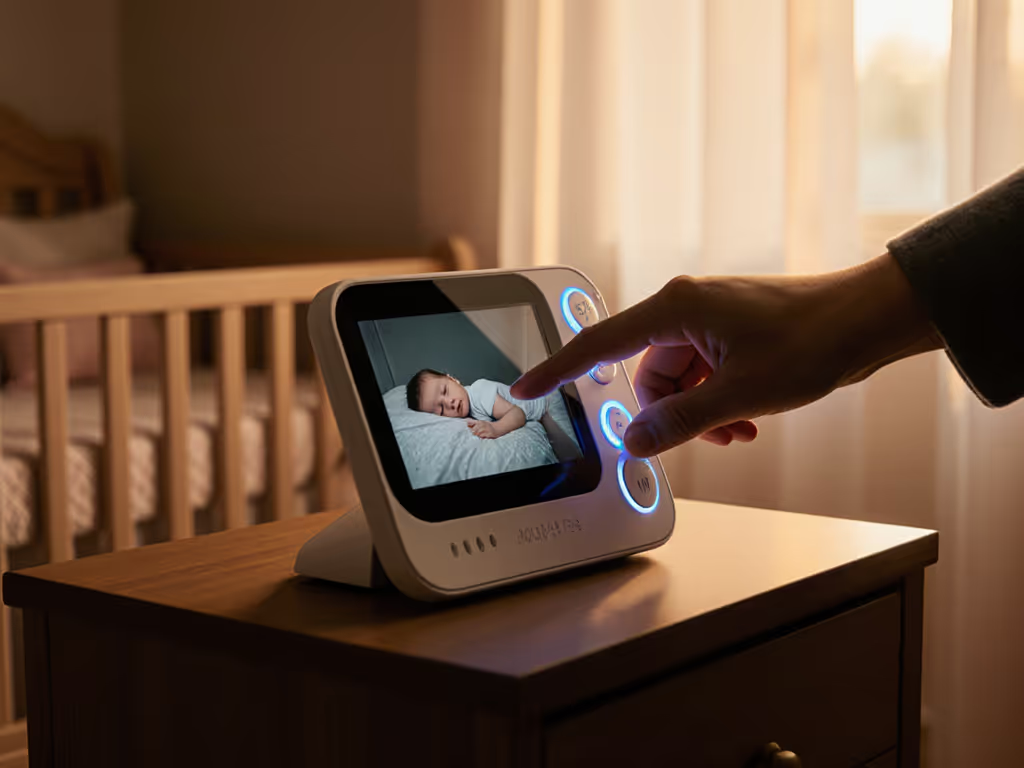
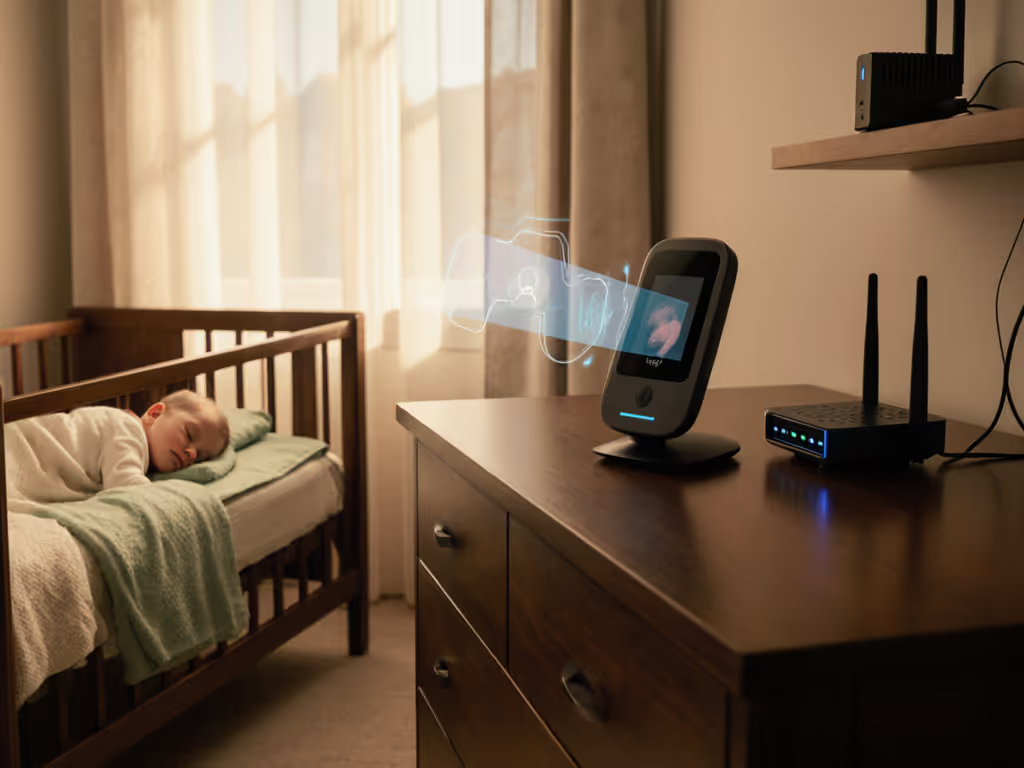
Baby monitors for visually impaired parents demand a fundamentally different design philosophy than standard options. While most reviews fixate on pixel count and camera zoom, the reality is simpler: a monitor without reliable audio, tactile controls, and dependable connectivity is just decorative. This guide centers on infant monitor reviews that prioritize what you'll actually use in the dark: your ears, your hands, and a connection you can trust.
I've spent years stress-testing monitors in tight quarters where connectivity matters and families can't afford surprises at 2 a.m. The difference between a monitor that serves you and one that exhausts you often comes down to plain talk about uptime percentages and cost-per-night math. Budget doesn't mean brittle, and accessibility doesn't require a subscription or a degree in tech troubleshooting.
The Reality of Accessibility in Baby Monitor Design
Most baby monitors are built for sighted parents. The moment you dig into accessibility features (voice-controlled baby monitors, high-contrast display monitors, baby monitor audio feedback, and tactile interface features), you realize how few manufacturers have genuinely thought through what works for visually impaired caregivers.
The good news: some core features that serve visually impaired parents also happen to build reliability. Crystal-clear audio means you catch subtle cues. Tactile buttons that work in the dark serve everyone during middle-of-the-night responses. Voice control eliminates fumbling with tiny screens. And monitors built for local-only viewing (not Wi-Fi dependent) often prove more stable for all users in interference-heavy apartments or older homes.
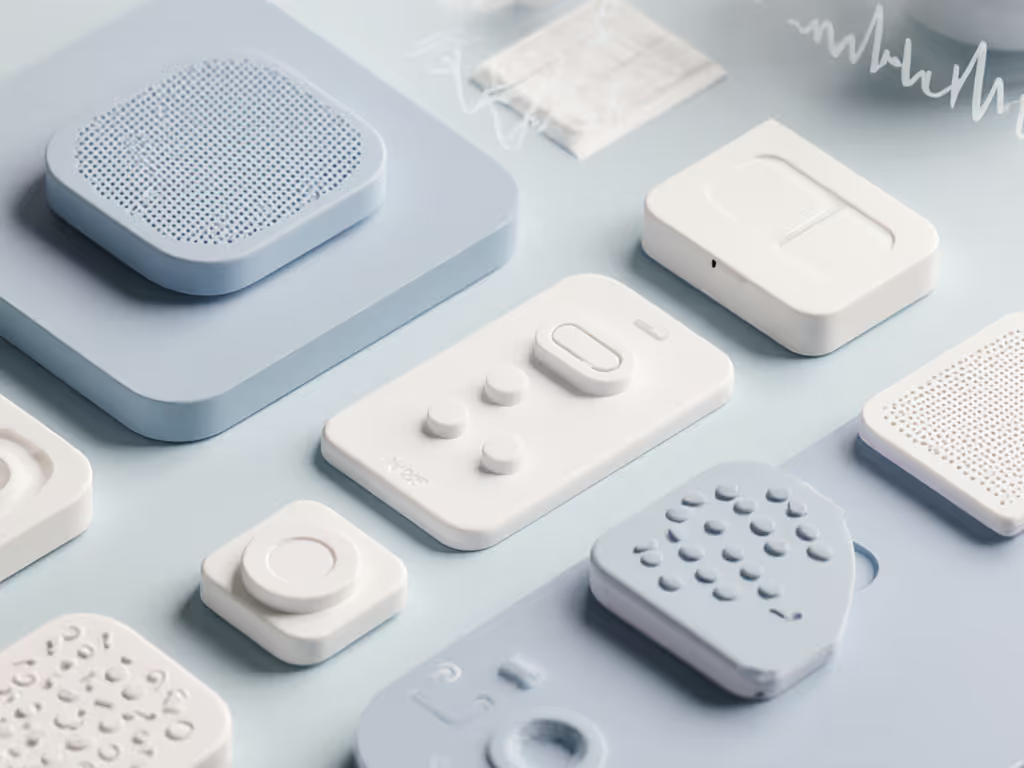
What follows is a numbered guide to what genuinely matters when you're choosing based on audio clarity, interference resistance, and the kind of uptime that lets you sleep.
1. Audio Clarity as Your Primary Tool
When sight isn't your monitoring method, audio quality stops being a secondary feature; it becomes your entire interface. Search results from lab-tested comparisons consistently highlight the Owlet Dream Duo 2 and HelloBaby HB6550 as top performers for sound clarity and quiet background operation.[1] These monitors deliver high-quality audio that doesn't mask important cues: the difference between a whimper, a self-soothing cry, and genuine distress that requires immediate attention.
The iBaby M8 2K achieved best-in-class nighttime performance with sound that felt like standing in the nursery itself, even when panning.[1] For side-by-side rankings and noise handling tests, see our audio quality comparison. For audio-first monitoring, sound clarity that minimizes latency matters more than video resolution you won't use.
What to test in your home: Sit outside the monitor's range and have someone play typical sounds: a baby cry, white noise from a machine, a cough, rustling. Real-world audio fidelity varies wildly based on room materials and interference. Visit a return-policy-friendly retailer so you can verify performance before commitment.
2. Local-Only (Non-Wi-Fi) Architecture for Stability
For visually impaired parents navigating a monitor via audio and voice control, connection drops are catastrophic. They don't just mean a blurry video: they mean silence, uncertainty, and the anxiety that undermines sleep.
Local monitors using FHSS technology (frequency-hopping spread spectrum) or closed 2.4 GHz transmission (like the HelloBaby models) avoid Wi-Fi congestion entirely.[4] Learn how it works and why it resists interference in our FHSS baby monitors guide. No cloud account, no reliance on internet uptime, no interference from your mesh network or neighbors' devices.
In a clearance bin, I once found three flashy Wi-Fi monitors and one unassuming FHSS unit. Over two weeks in a walk-up with thick plaster, the Wi-Fi trio dropped out nightly. That saved a family cash for diapers, and their nerves at 2 a.m.
Local-only doesn't mean primitive. The HelloBaby series offers 2.4GHz transmission with no Wi-Fi required, compact design, long battery life, infrared night vision, temperature monitoring, and crystal-clear audio and video.[4] Pay once, sleep always, skip subscriptions and surprises.
3. Voice Control and Hands-Free Operation
Voice-controlled baby monitors eliminate the need to navigate small screens or touch menus in the dark. You speak a command; the monitor responds. For visually impaired parents, this translates directly to independence and speed during critical moments.
When evaluating voice control, look for:
- Natural speech recognition that understands your accent and colloquial phrasing without requiring memorized commands
- Offline voice processing (not cloud-dependent, which means latency and privacy risks)
- Tactile feedback - a button press or haptic response that confirms your command was heard
- Customizable alerts that you can tune by voice (adjusting sensitivity thresholds without visual menus)
Not all monitors offer mature voice features yet. When shopping, ask retailers for hands-on time to test voice accuracy in a noisy environment (kitchen, living room during a show). Return policies that allow 14-30 days of real-world testing are essential before you commit.
4. High-Contrast Display for Low-Vision Parents
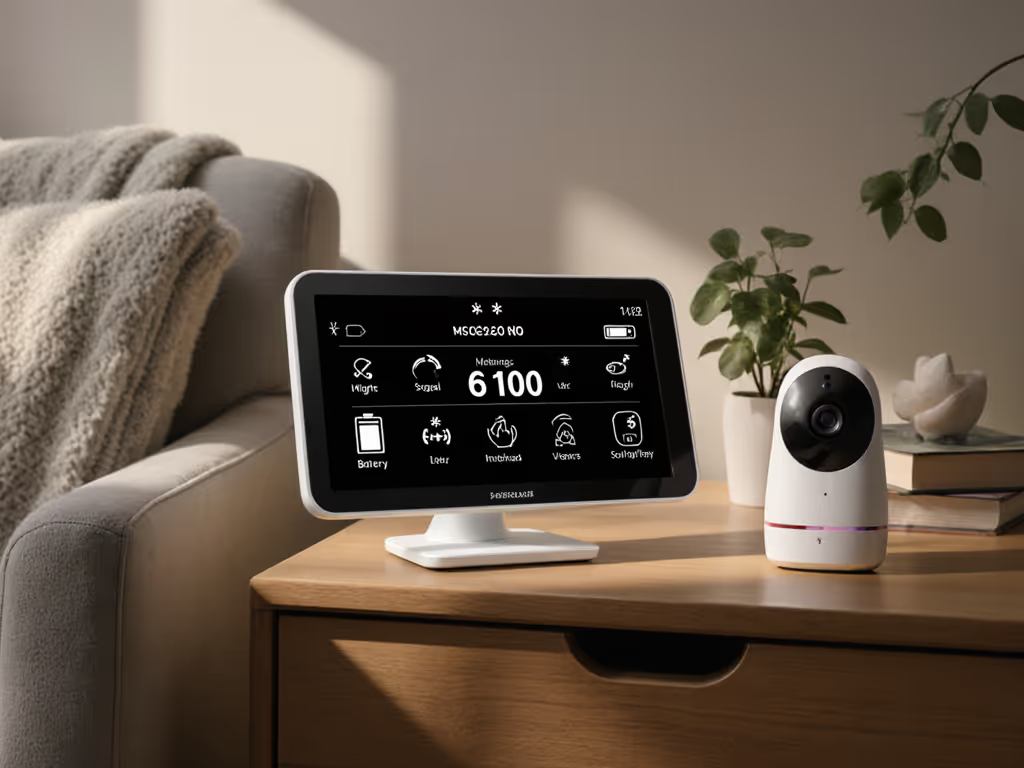
Some parents have residual sight - enough to benefit from a large, high-contrast parent unit but not enough for standard small screens and default color palettes. Look for monitors offering:
- Large 5.5-inch to 7-inch displays with adjustable brightness and contrast[2][3]
- Customizable color inversion or high-contrast modes (black text on white, not the reverse)
- Bigger status indicators and larger font sizes for battery, signal strength, and temperature
- Dimming modes that don't flash or pulse during night use
The VTech line offers up to seven-inch high-definition displays with 1080p resolution, which accommodates low-vision caregivers better than pocket-sized screens.[2] The Babysense 5.5" 1080p Full HD Split-Screen supports multi-camera viewing without cramping the interface.[3]
5. Tactile Interface Features and Physical Controls
Tactile interface features mean buttons you can feel, locate, and press without looking. This matters for all parents monitoring at night, but for visually impaired caregivers, it's non-negotiable.
Evaluate:
- Button placement and spacing - can you distinguish mute, volume up, and talk-back buttons by touch alone?
- Tactile feedback - do buttons click or depress noticeably, or do they feel flat and ambiguous?
- Raised edges or ribbed grips that help you orient the device in your hand
- Labeled buttons in raised lettering (Braille is rare but worth requesting from manufacturers)
Portable monitors designed for travel (like the HelloBaby offerings) typically prioritize ergonomic buttons because outdoor/mobile use demands hands-free reliability.[4] Their compact design and physical tactile controls make them more accessible than large screen-heavy units where everything is touch-based.
6. Sound Activation and Cry Detection Tuning
Noisy households (older homes with plumbing, siblings, dogs, street noise) need baby monitor audio feedback systems that distinguish a real cry from background fuzz. Lab testing showed significant variation: monitors like the HelloBaby HB6550 and Owlet Dream Duo 2 excelled at activating the parent unit only on genuine distress, while others constantly triggered false alarms.[1]
Before buying, ask:
- Can you adjust the sensitivity threshold? Ideal is a simple dial or voice-adjustable setting, not a buried menu.
- Does the unit mute during your own talking or sleep sounds? Good cry detection learns your household's baseline.
- What's the latency between cry detection and alert? If it's more than a few seconds, you lose the advantage of early intervention.
- Test the white-noise performance - run a fan or sound machine in the test room and verify the monitor doesn't spam alerts.
Return-policy insights matter here: rent-to-own arrangements or 30-day trials let you test in your real home's acoustic environment before commitment.
7. Night Vision and Low-Light Audio Clarity
Infrared night vision glare and washout are common problems that affect all parents, but they also impact audio quality. Monitors that overheat their IR emitters often produce noisy, distorted audio in dark rooms. The iBaby M8 2K delivered superior night-time performance with clean audio and realistic image reproduction even in pitch-black nurseries.[1]
When you can't rely entirely on video, the audio-visual sync matters: if the monitor's microphone is buried or dampened when IR comes on, you lose crucial cues. For a deeper look at IR types and real visibility trade-offs, read our baby monitor night vision guide.
What to check:
- Does audio clarity remain consistent in darkness, or does the monitor introduce hum/noise when IR activates?
- Are there manual IR controls? (You want to turn it off if you have any ambient light; it extends battery life and reduces false triggers.)
- Does the parent unit have a separate earphone jack or Bluetooth audio? This lets you monitor while protecting your privacy in shared spaces.
8. Interference Resistance and Real-World Testing
Wi-Fi monitors perform unpredictably in dense apartments, older homes with thick plaster or metal framing, and households with multiple 2.4 GHz devices. If your walls or framing are part of the problem, use our home construction guide to match tech and placement. The Wyze Cam v3 offered impressive daytime video but ranked lower for audio performance and suffered from latency and static in high-interference environments.[1]
Local FHSS monitors like HelloBaby sidestep Wi-Fi congestion entirely by using a dedicated 2.4 GHz closed network. You don't compete with your mesh router, smart home hub, or neighbors' networks.[4]
Before committing:
- Test range in your actual home: upstairs to downstairs, across a long hallway, into a basement or detached garage.
- Ask about FHSS frequency-hopping specifications (48+ channels is robust; fewer than 20 is vulnerable to interference).
- Borrow a monitor for 48 hours from a friend or local parenting group (interference patterns are often specific to your building's materials and neighbor density).
- Avoid Wi-Fi-only options if you live in apartments, condos, or have other smart devices on 2.4 GHz.
9. Battery Life and UPS Resilience
Parent units that die overnight are useless. Get practical ways to extend runtime in our battery life guide. The HelloBaby HB6550 and Owlet Dream Duo 2 rank highest for quiet operation and long battery life, which is critical for caregivers who rely on audio without a constant visual check.[1]
What to verify:
- Manufacturer specs for battery life under continuous monitoring (not idle mode).
- Actual field reports from parents in your climate (cold nights drain batteries faster).
- Does the parent unit charge via USB-C (widespread, easier to replace chargers) or proprietary connectors (risky for long-term availability)?
- Can you add an external battery pack or UPS for extended monitoring during power outages?
- If using a smartphone as a backup monitor, what's the app's battery drain? (It should be minimal.)
For visually impaired caregivers, battery anxiety compounds other stressors. You need equipment that won't surprise you at 2 a.m.
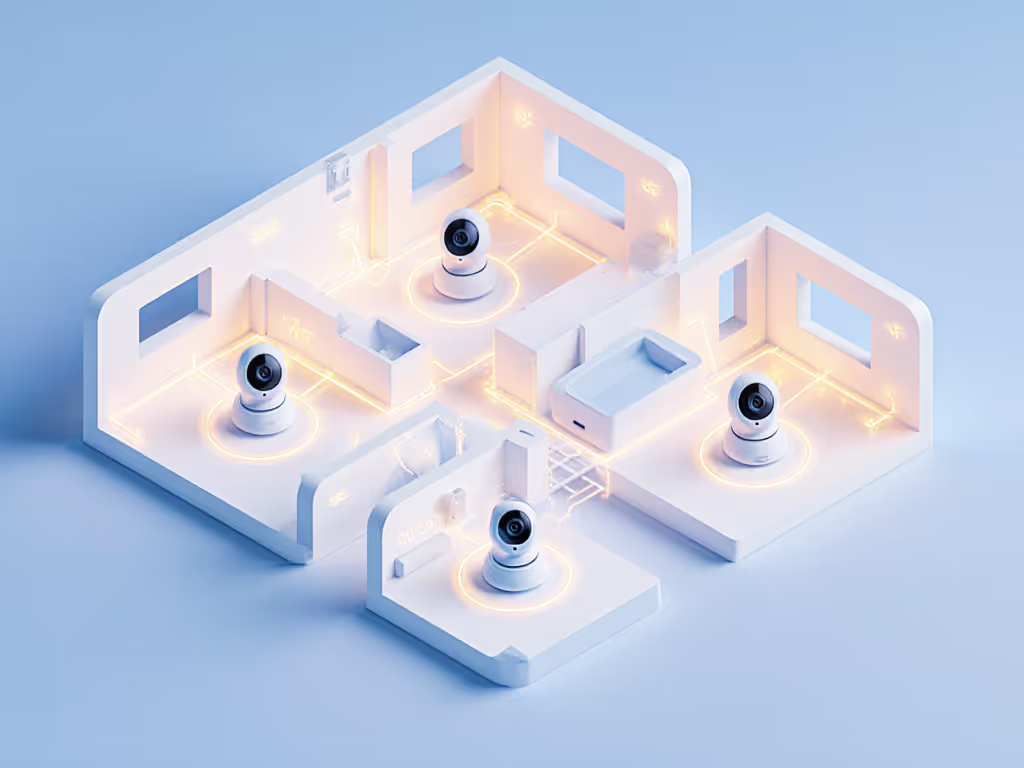
10. Multi-Camera Setup and Expanded Monitoring
Twins, siblings in separate rooms, or multi-story homes require clean multi-camera workflows. The Babysense 5.5" 1080p Full HD Split-Screen supports up to four cameras with intuitive controls and a solid split-screen display.[3]
For audio-first monitoring across multiple cameras:
- Cycling mode: Does the parent unit automatically rotate through cameras at user-defined intervals, or do you have to manually switch?
- Audio priority: Can you set one camera as primary so its audio dominates unless another infant cries louder?
- Tactile navigation: Are buttons for cycling through cameras large, well-spaced, and easy to locate in the dark?
- Add-on cost: Expansion cameras should cost significantly less than the base unit (not a money grab).
Local-only monitors often handle multi-camera setups more gracefully than cloud-based systems because there's no bottleneck at internet upload speeds.
11. Setup Friction and Auto-Reconnection
Fragile connections that require frequent reboots or manual re-pairing are disqualifying for visually impaired parents. Pairing errors force you to navigate menus you can't see, ask for help, or spend energy you don't have during sleep deprivation.
Instead, prioritize monitors with:
- One-touch or voice-initiated pairing that completes in under two minutes
- Auto-reconnect logic that restores connection if the parent unit loses signal momentarily (no manual intervention needed)
- Clear audio feedback when pairing succeeds (a beep, not a visual checkmark)
- Graceful fallback: if video drops but audio remains, the parent unit should stay active on audio-only mode
Local FHSS monitors typically excel here because they don't depend on Wi-Fi credentials, network names, or app login. Pair once, use reliably.
12. Privacy, Security, and Transparent Data Practices
Visually impaired parents (like all caregivers) need monitors that don't phone home, share data, or introduce new privacy vectors. Monitors requiring cloud accounts, mandatory app registration, or unclear encryption create anxiety and risk.
Look for:
- Local-only viewing (no cloud recording unless you opt in explicitly)
- No mandatory accounts or sign-up - the monitor should work out of the box
- Clear encryption specs: if Wi-Fi is used, is it WPA2 or WPA3? If FHSS, what's the pairing security model?
- Open-source or third-party audited security if available (rare but worth seeking)
- Transparent firmware update practices: are updates pushed automatically or optional? Do they change privacy settings?
Manufacturers who hide their security model or bury data practices in dense terms-of-service documents deserve skepticism.
Summary and Final Verdict
The best baby monitor for visually impaired parents isn't a single product - it's a match between your home's layout, your monitoring style, and a device that prioritizes reliability over novelty.
If you prioritize audio clarity and proven uptime: Local FHSS monitors like HelloBaby and closed-network systems outperform Wi-Fi alternatives in dense or interference-heavy environments. You trade some flexibility (no remote viewing from work or while out) for rock-solid connectivity and privacy by design.
If you have residual sight and need higher-contrast, larger displays: The VTech 1080p seven-inch display and Babysense 5.5-inch split-screen options provide better ergonomics for low-vision caregivers without forcing you into subscription ecosystems.
If audio quality and sound clarity are your primary tools: Lab-tested champions like the HelloBaby HB6550 and Owlet Dream Duo 2 consistently delivered superior audio performance, though note that Owlet is Wi-Fi dependent and requires cloud accounts.[1]
What to do now:
- Identify your priority constraint: interference (Wi-Fi dropout risk), distance (does the monitor need to reach outdoors?), or accessibility features (voice control, high-contrast display, tactile buttons).
- Map your home's interference profile: Ask neighbors in apartments or check RF survey reports if you live in a condo. Dense 2.4 GHz environments (many smart speakers, mesh routers, microwaves) favor local FHSS over Wi-Fi.
- Test with a return-friendly retailer: 14-30 day return policies are non-negotiable. Real-world audio clarity, interference, and latency can't be judged from specifications.
- Prioritize uptime per dollar and cost-per-night math: A $150 monitor that works reliably for three years costs ~$0.14 per night. A $300 Wi-Fi monitor that drops connection weekly and requires a subscription isn't cheaper: it's a false economy.
- Confirm accessibility features hands-on: Voice control latency, button tactile feedback, and audio clarity in noise are features you need to feel and hear yourself.
Reliable nights shouldn't require premium budgets. Stability first; extras optional. When you choose a monitor grounded in audio clarity, local connectivity, and genuine uptime (not marketing categories), you reclaim sleep confidence. That matters more than any spec sheet.
Budget doesn't mean brittle. The monitors highlighted here represent real-world testing and user feedback focused on accessibility and reliability. No subscription upsells. No smart home lock-in. Just equipment designed to work in your home, for your family, without surprises.
Related Articles