Baby Monitor Attachment Impact: Healthy Monitoring Habits
By Nora Jensen • 20th Jan
As a former home network installer turned baby monitor specialist, I've witnessed firsthand how baby monitor attachment impact extends beyond Wi-Fi signals into genuine emotional connections. While parents rightly focus on camera specs and range, the real question isn't whether your monitor works but rather how your healthy monitoring habits shape bonding and mental well-being. Walls aren't opinions, they are physical and psychological boundaries that require strategic navigation.
What does research say about baby monitors and parent-child bonding?
Studies reveal a nuanced relationship between technology and attachment. Research published in Infant Mental Health Journal demonstrates that secure attachment fundamentally relies on the caregiver's psychobiological regulation of the infant's developing limbic system. When parents become hyper-focused on sleep metrics and app notifications, they risk substituting intuitive parenting with data-driven anxiety. One study documented parents describing their monitoring behavior as "obsessive" or "addictive," with sleep difficulty persisting even when the baby was sleeping soundly.
Yet technology isn't inherently harmful. When used mindfully, baby monitors can actually enhance bonding through features like two-way audio that lets parents soothe without physical intrusion. The key distinction lies in whether the device serves as a safety net or becomes the primary relationship mediator. Intentional use makes all the difference. For evidence-based tips, see our monitor impact on parental sleep.
How does physical home layout influence psychological monitoring patterns?
This is where my specialty intersects with psychology. In a narrow townhouse with foil-backed insulation, I saw parents panic nightly as their nursery camera dropped signal whenever the oven preheated. The real issue wasn't the baby's safety. It was the parents' escalating anxiety from unreliable information. We shifted the parent unit one room closer, angled the base station away from ducts, and added Ethernet for local viewing. Instantly, offline stability restored their confidence.
Walls aren't opinions, they are physical manifestations of signal boundaries that directly impact parental mental states. Map the house, then pick the monitor, not vice versa.
Your home's construction materials dictate more than signal strength. They shape how frequently you'll experience that jarring "connection lost" notification that spikes cortisol levels. Plaster walls, brick veneers, metal studs, and foil-backed insulation all require different placement heuristics to maintain reliable monitoring without constant check-ins. For material-specific tactics, check our home construction signal guide.
What are the psychological effects of baby monitoring that parents overlook?
The "always-on" nature of modern monitors creates what psychologists call "continuous partial attention," a state where parents remain perpetually alert to potential alerts. This leads to:
- Sleep fragmentation even during baby's sleep cycles
- Intrusive worst-case scenario thinking triggered by ambiguous movements on screen
- Erosion of parental intuition as parents substitute data for instinct
A PMC study found parents using sleep sensors reported both increased anxiety and relief, demonstrating technology's dual-edged nature. Crucially, researchers found "no evidence of emotional disconnection between parent and child," but did note that "parent-perceived children's health is impacted" by monitoring technology.
What are practical mindful monitoring practices for different home layouts?
Your floor plan should dictate your monitoring strategy, not the reverse. Here's how to implement healthy monitoring habits based on your architecture: For step-by-step camera placement and troubleshooting, see our setup and placement guide.
Apartment/Condo Dwellers:
- Position camera to minimize neighbor Wi-Fi interference (2.4GHz channels)
- Use FHSS/DECT technology that isn't competing with congested networks
- Implement strict "off hours" when baby is awake and supervised
Multi-Story Homes:
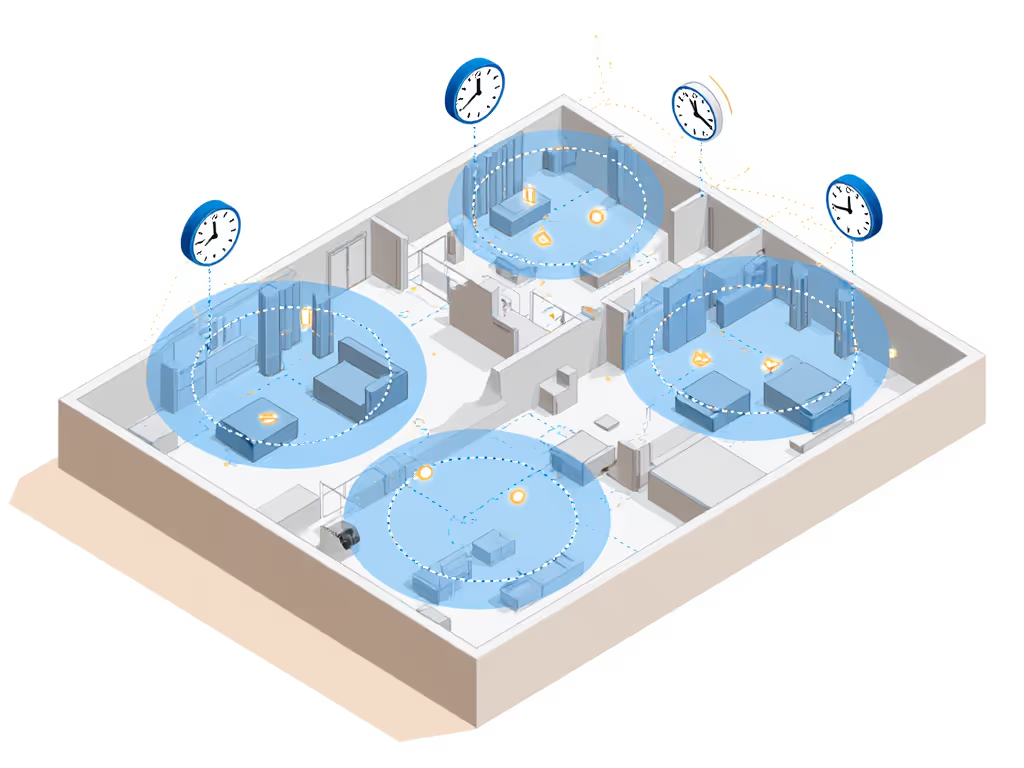
- Create floor-plan overlays showing signal dead zones (stairwells, bathrooms)
- Place parent units on intermediate landings rather than distant bedrooms
- Use directional antennas pointed toward nursery for clear audio feed
Older Plaster/Brick Homes:
- Conduct material callouts to identify signal-blocking zones
- Avoid mounting cameras directly opposite metal studs
- Prioritize local-only viewing to eliminate cloud dependency during signal drops
How can parents reduce monitor dependency while maintaining safety?
Start with placement heuristics that minimize false alarms:
- Position cameras to show breathing movements clearly (avoiding IR washout)
- Set realistic sound thresholds that ignore white noise machines
- Create before/after maps of anxiety triggers pre- and post-optimization
Then implement these techniques to reduce monitor dependency:
- Designated "device-free" periods during awake time to rebuild natural observation skills
- Audio-only monitoring during daytime naps to reduce visual fixation
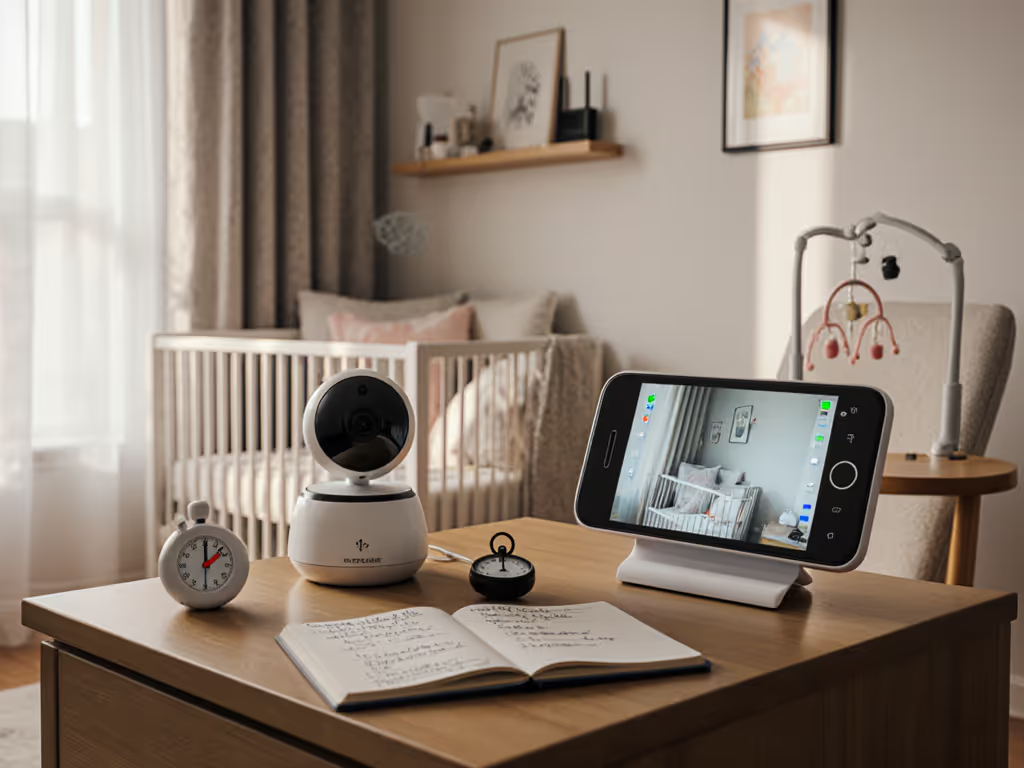
- Scheduled check-ins instead of constant viewing (e.g., 10 minutes on, 20 minutes off)
- Physical anchor points like placing a hand on the crib instead of checking the screen
What's the connection between home infrastructure and parental mental health?
Your router's channel selection affects more than video quality. It impacts cortisol levels. For privacy and network best practices, see our WiFi monitor security guide. When parents experience frequent dropouts in L-shaped layouts or thick-walled homes, they develop "alert fatigue" where every notification triggers panic. Conversely, reliable monitoring in properly mapped homes creates psychological safety that reinforces secure attachment. Stability calms the nervous system.
Remember the core principle: Placement and materials matter more than horsepower. Map the home, then choose the monitor. Your mental bandwidth is precious. Do not waste it troubleshooting avoidable signal issues when you could be strengthening actual parent-child bonding with technology.
Final Verdict: Your Monitor Should Disappear Into the Background
Healthy monitoring habits begin with acknowledging that baby monitor attachment impact operates on two levels: the physical signal path through your home's materials, and the psychological connection between parent and child. Technology serves bonding best when it becomes invisible, providing reliable reassurance without demanding constant attention.
The healthiest monitoring setup isn't the one with the highest resolution, but the one that works so seamlessly you occasionally forget it's running. When your camera maintains stable connection through plaster walls and metal studs without dropouts, you'll find yourself checking less frequently because you trust the system. This reliability paradoxically reduces monitor dependency while strengthening actual parent-child bonding.
Prioritize local-first systems that continue working during internet outages, optimize placement using floor-plan overlays, and set boundaries around viewing time. If you're deciding between dedicated parent units and phone apps, our standalone vs app comparison breaks down reliability trade-offs. Remember: Walls aren't opinions, they are mapable realities that determine whether your monitor builds confidence or anxiety. Map the house, then pick the monitor, not vice versa. True security comes not from constant surveillance, but from knowing your system works exactly where and how you need it.
Related Articles