What Your Baby's Sleep Data Actually Means
By Hana Ito • 23rd Mar
Baby monitor sleep pattern interpretation can feel like reading an airplane cockpit (graphs, percentages, stage labels, and notifications all competing for your attention at midnight). But here's the truth: most of that data already tells you what you need to know. You just need to stop treating it as raw numbers and start reading it as a story about what your baby actually needs.
Parents trying to understand sleep tracking data often make the same mistake: they assume more information equals better decisions. In reality, the opposite is true. At 3 a.m., fewer decisions means more calm. If nonstop tracking feels like it's hurting your rest, see our monitor use and parental sleep guide.
The Problem: Sleep Data Without a Manual
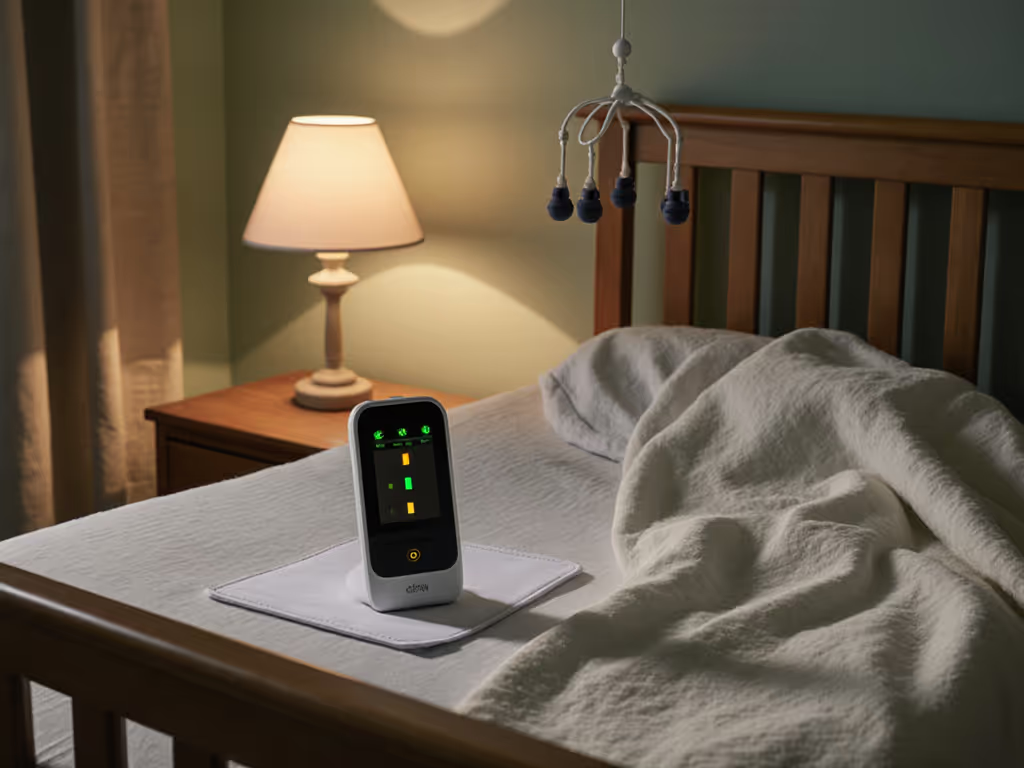
Your baby monitor's sleep analytics promise clarity. It records sleep stages, cycle length, total hours, and even quality scores. Yet many parents find themselves staring at a dashboard thinking, "This tells me what happened. But what does it mean?" The monitor shows active sleep and quiet sleep, displays a graph of the last 90 minutes, and maybe flags a "sleep quality" number, but without a framework for interpreting it, you're left guessing whether your baby slept well or your setup just worked harder.
The gap between data and understanding creates unnecessary anxiety. A low sleep quality score might mean nothing. Or it might signal a real pattern worth investigating. The uncertainty itself becomes exhausting.
The Agitation: Decisions You Shouldn't Have to Make
Without clear interpretation, parents often over-respond to the wrong signals. You see a fragmented sleep graph and wonder if sleep training is working. You notice your baby wakes after 40 minutes and assume they're ready to sleep longer, when actually that is a normal cycle length, and the wake might be a brief arousal they self-settled through. You second-guess handoff routines to your partner or nanny because the monitor shows inconsistent sleep patterns night-to-night, not realizing those variations are completely typical.
Working parents juggling shifts or caregivers trading watches during sleep training particularly feel this friction. A family monitoring their infant's progress during sleep training kept tweaking their approach because the monitor showed uneven naps and frequent short cycles. They didn't realize their baby was actually connecting two cycles by week three, but the data presentation didn't make that visible. They were solving a problem that didn't exist, burning energy they didn't have.
That's the real cost of confusing data: you spend mental labor on interpretation when you could be spending it on rest, or on refining what actually works.
The Solution: Sleep Data You Can Act On
Understand What You're Actually Seeing
Your monitor is showing you two core sleep states.[1][8]
Active sleep (also called REM or light sleep) is where your baby's brain is most active. You'll see fluttering eyelids, facial expressions, irregular breathing, and small twitches.[1] This is developmentally important (it supports brain growth and learning), but it's also when babies wake more easily. This is not a problem. This is biology.
Quiet sleep (non-REM or deep sleep) is deeper and more restorative. Here your baby is still and breathes regularly.[8] More quiet sleep generally correlates with a more rested baby when they wake. But newborns and young infants spend roughly equal time in both states, and that balance shifts as they mature.[1]
When your monitor displays a sleep cycle, it's showing you both stages compressed into one complete rotation. A newborn's cycle lasts 30-45 minutes; by 3-6 months, it stretches to 40-50 minutes.[1] That cycle repeats throughout the night.
Read the Graph, Not the Anxiety
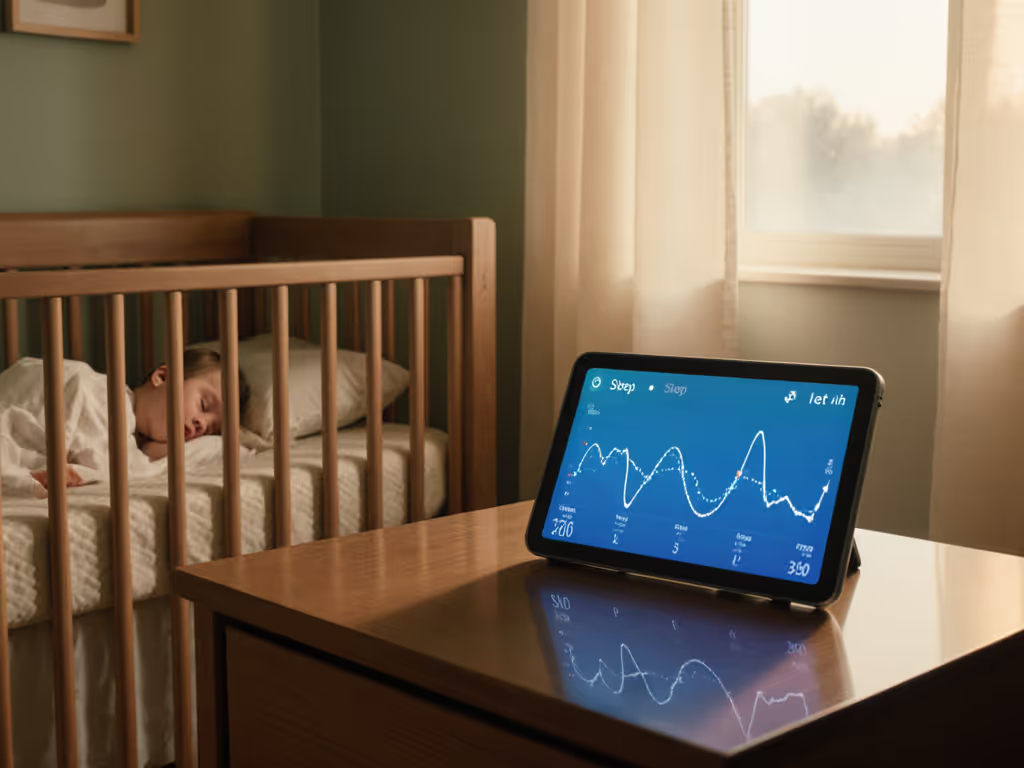
Most monitors show you the last 90 minutes of sleep in a visual format. Here's what a healthy pattern looks like:
- Multiple stage transitions (light to deep and back) = your baby completed at least one full cycle. That's a success.
- A brief wake between cycles = completely normal. Babies often have micro-arousals between sleep cycles.[3] If they resettle within a minute or two, the cycle continued (your monitor might just show it as a dip).
- Fragmented appearance early in the night = common in the first 1-3 hours, especially in the newborn stage. Newborns' circadian rhythm is underdeveloped until around 4-6 weeks of age.[1]
- More consolidated, deeper-looking segments as night progresses = your baby's sleep architecture is maturing. This is exactly what you want to see by 3-6 months.
The graph is not a report card. It's a logbook.
Know the Benchmarks (And Release Perfectionism)
Research confirms that new parents routinely overestimate how much sleep their babies get.[4] A baby's true sleep often falls shorter than the monitor's logged total, and night wakings are more frequent than you realize when you're not watching every moment. This isn't a monitoring failure, it's just sleep in reality.
Use these age-based anchors instead:[1][5]
- Newborn (0-3 months): 14-17 hours total per day, split into many short blocks. Wakes every 1-3 hours for feeds or comfort. Cycles are 30-45 minutes.
- Infancy (3-6 months): 12-15 hours total per day. Longer stretches of nighttime sleep are possible, though night wakings remain normal. Cycles extend to 40-50 minutes. By 3-4 months, some babies begin connecting cycles; by 4-6 months, many can sustain 2-3 connected cycles.
- Around 9-12 months: Most babies can string together multiple cycles for longer consolidated sleep.[1]
If your baby falls within these ranges, the monitor is confirming normalcy (not flagging a problem).
Use Sleep Data for Caregiver Handoffs
This is where sleep cycle analysis for infants stops being abstract and becomes practical. When you're handing monitoring duties to a partner, grandparent, or nanny, don't hand them the full dashboard. Hand them a two-line note:
After a 40-minute cycle, babies often have a brief wake. If they fuss for 1-2 minutes and then resettle, let them. If they cry hard after 3 minutes, that's your cue to check diaper or hunger.
Or:
Tonight she's connected two cycles (that's progress). She might consolidate longer stretches by next week. If you see the graph show a 90-minute block instead of two 45-minute blocks, that's a win.
Simple framing prevents over-intervention. It creates consistency. And it means your backup caregiver isn't second-guessing every micro-wake they see on screen. If multiple caregivers will monitor overnight, see our multi-user baby monitors guide for stress-free handoffs.
Interpret Sleep Quality Metrics (If Your Monitor Offers Them)
Some monitors assign a "sleep quality" score or note whether cycles are "fragmented" versus "consolidated."[2] These are useful trends over weeks, not verdicts on a single night. For a deeper look at which AI sleep-tracking features actually help, see our side-by-side comparison.
- A single night of fragmented sleep = irrelevant. Teething, travel, developmental leaps, or just a harder night happen.
- A pattern of shorter cycles improving to longer ones over 2-3 weeks = your baby's sleep architecture is maturing or sleep training is working.
- Stable, similar-looking graphs night after night = your routine is reliable. That's the goal.
Use the metric as a long-view lens, not a microscope for a single night.
Night Vision Should Feel Like
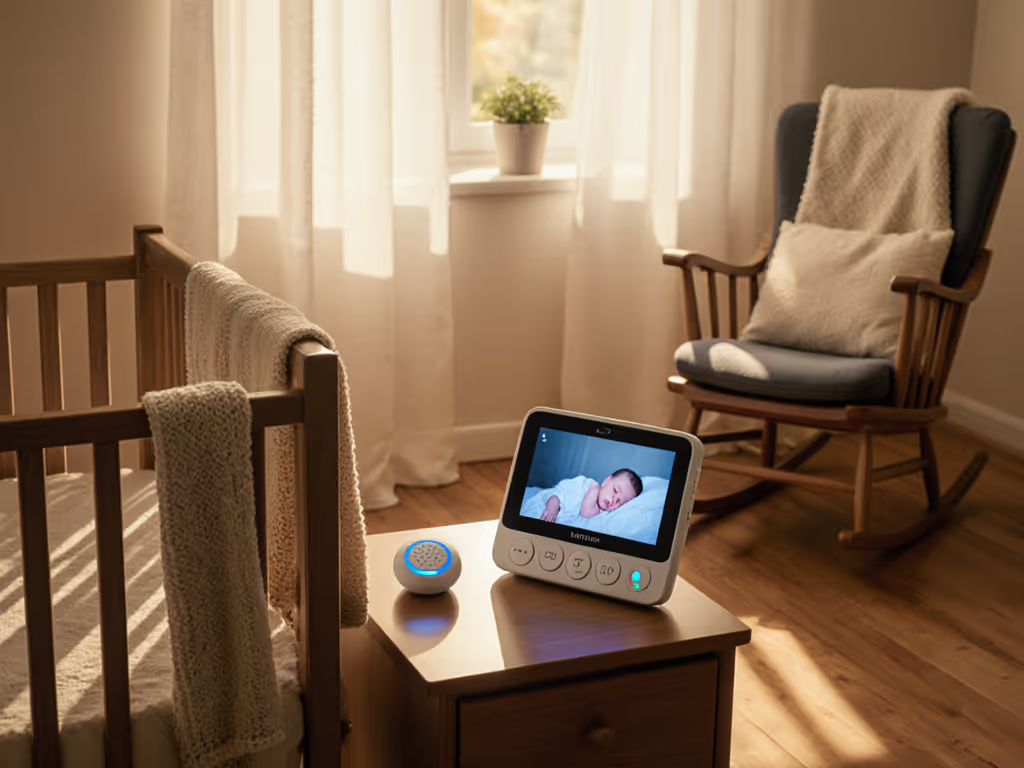
You forget you're looking at data. You can see your baby's chest rise, know their head position, and know immediately if they're truly awake or resettling. If your monitor's night vision forces you to squint, adjust sensitivity repeatedly, or guess what you're seeing, the data is useless no matter how detailed it is. Clarity matters more than every technical stat. To understand what makes night images truly usable, read our baby monitor night vision guide.
Moving Forward
The best sleep data is the kind you stop actively reading and start trusting. Once you understand what a healthy cycle looks like for your baby's age, what normal fragmentation means, and how to share that understanding with your backup caregivers, the monitor becomes just a tool (not a source of constant interpretation).
Your next step: pull up your monitor's last few nights of sleep data. Map them against your baby's age using the benchmarks above. Look for the patterns (not the perfection). Then write down one simple observation to share with your partner or next caregiver. You've just turned data into wisdom.
Related Articles