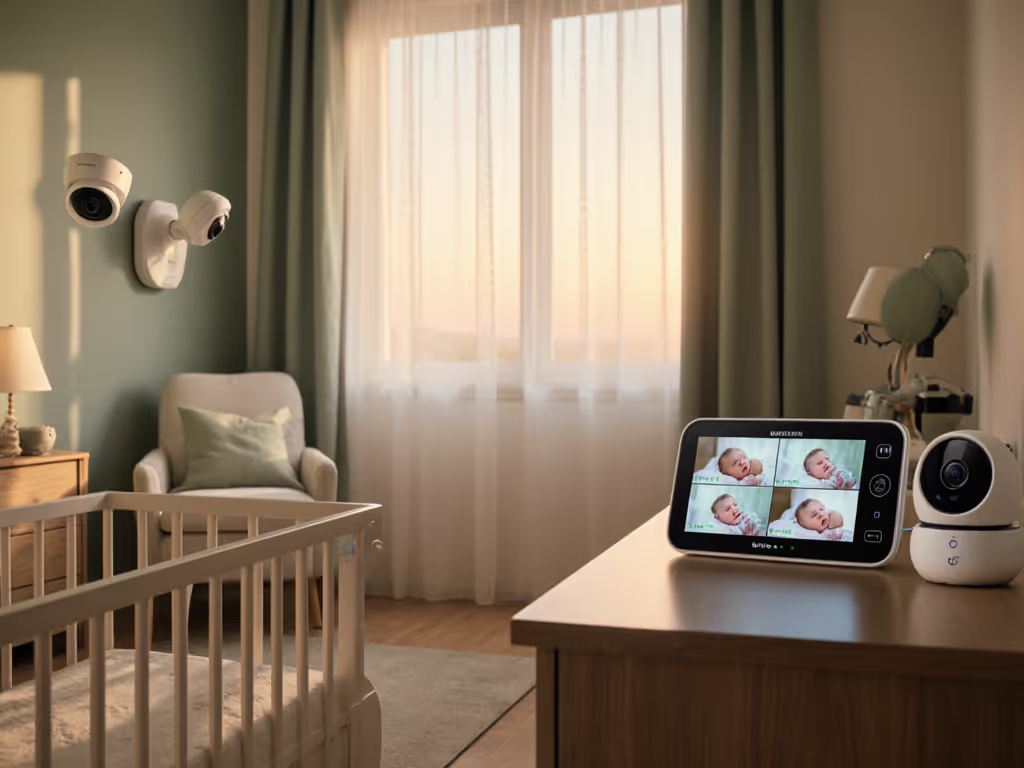
Breathing Monitor Limitations: Realistic Expectations
By Amina Qureshi • 4th Apr
When you're expecting or have a newborn, the idea of a breathing monitor feels like an obvious safeguard, a way to know instantly if something changes while you sleep. The reality, however, sits in a narrower lane. Breathing detection accuracy rates vary widely depending on device type, placement, and environmental conditions, and most consumer monitors were never designed to prevent SIDS or replace watchful care. Understanding what these devices can and cannot reliably do is the first step toward making a choice that fits your family's actual risk profile, rather than marketing promises.
This guide cuts through the claims and sets realistic expectations grounded in evidence, engineering constraints, and honest performance boundaries.
Why Are Breathing Monitors Marketed So Confidently When Evidence Is Weak?
Breathing and heart-rate monitors for infants sell a powerful narrative: peace of mind backed by technology. Yet the research tells a different story. The American Academy of Pediatrics (AAP) does not recommend routine use of home apnea monitors for the prevention of SIDS because no data support their effectiveness in reducing risk.[4] The FDA, in a September 2025 safety communication, warned that many over-the-counter infant vital-sign monitors have not been reviewed for safety or effectiveness, and inaccurate measurements can lead to unnecessary medical care or delayed treatment for serious symptoms.[3]
The gap between marketing and evidence exists partly because consumer breathing monitors operate in a regulatory blind spot. Unlike hospital-grade devices, most home monitors bypass FDA clearance entirely. Manufacturers can make broad claims about detecting "breaths per minute" or providing "actionable health insights" with minimal scrutiny, particularly when they add disclaimers stating the device is not intended to diagnose or treat conditions.[2] Parents see a polished app and wireless sensor, assume the technology is medical-grade, and buy in.
The companies are not necessarily deceiving; they are exploiting a real human need (the fear of sudden loss) and filling it with a product that feels protective, even when the science suggests it isn't.
What Are the Core Technical Limitations of Home Breathing Monitors?
False Alarms and False Negatives
Every breathing monitor carries a dual failure mode: it can sound an alarm when the baby is breathing normally (false positive for apnea), or it can fail to detect actual breathing stops (false negative for apnea).[1] In clinical studies dating back decades, both errors have been documented in devices marketed for home use. A trial period in controlled settings can sometimes identify and minimize these errors through sensitivity adjustment, but once the monitor leaves the clinic and enters a real home (with a mobile infant, different sleep positions, loose electrode dots, or variable ambient noise), the environment becomes less predictable.[1]
This unpredictability matters. When a monitor sounds an alarm in the middle of the night and the baby is visibly fine, the parent experiences "alarm fatigue." Experts worry that repeated false alarms can paradoxically increase parental anxiety and lead to unnecessary emergency room visits, rather than reducing worry.[2]
Breathing Pattern Monitoring Boundaries
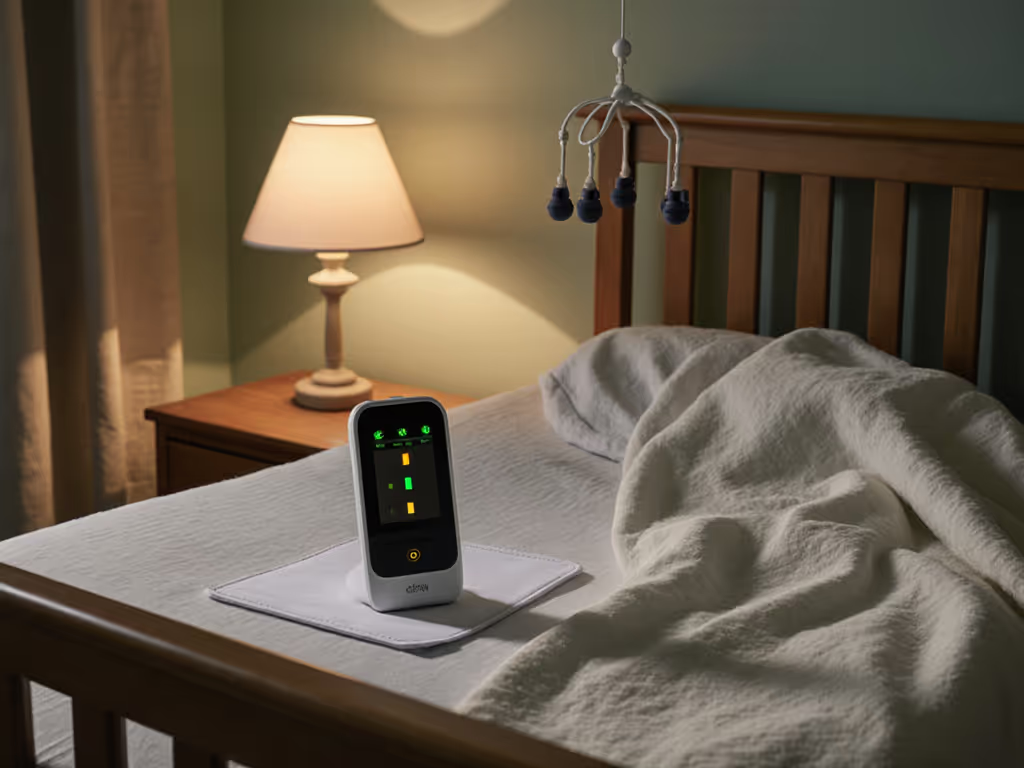
Breathing monitors detect movement or heart-rate changes, not gas exchange. A baby can have shallow, inadequate breathing that the monitor might not flag, or pause briefly without triggering an alarm if the threshold is set high. Contact-based devices (chest bands or electrode dots) are sensitive to placement and infant movement; they rely on consistent skin contact and can shift during sleep. Contact-free monitors (radar or video-based) face different constraints: they may struggle in near-darkness, with certain fabrics or sleep positions, or when the baby is bundled under blankets.[5]
None of these limitations are flaws in the traditional sense; they reflect the physical and technological boundaries of non-invasive infant monitoring. Yet they mean realistic breathing monitoring expectations must be humble. A monitor cannot differentiate between safe periodic breathing (normal in newborns) and dangerous apnea without context that the device simply does not have.

Privacy and Data Boundaries
Breathing monitors that "phone home" also carry a hidden cost. Many popular models transmit data to cloud servers for processing, storage, or app notifications. Parents often don't know what is being transmitted, how long it is retained, or who has access to it. Some devices create mandatory accounts; others auto-record video. When a monitor is positioned to capture the nursery, it is also capturing metadata, device IDs, network activity, timestamps of distress events, signal strength fluctuations, that leave a trail.[2] If it phones home, it needs a very good reason; a local-only device with on-device processing or end-to-end encryption eliminates that risk entirely, but such options remain rare in the consumer market. To understand local storage options and how to keep footage off the cloud, see our SD card baby monitors guide.
When Do Doctors Actually Recommend Breathing Monitors?
Doctors do recommend home cardiorespiratory monitoring, but in narrow, high-risk scenarios, not for routine infant care.[5] Monitors may be suggested for:
- Premature or significantly low-birth-weight infants with documented breathing or heart-rate instability
- Babies with diagnosed sleep-related breathing disorders (such as central apnea)
- Infants requiring home oxygen or ongoing respiratory support
- Babies with rare genetic or metabolic conditions affecting respiration
- Infants recovering from an Apparent Life-Threatening Event (ALTE) that required resuscitation
In these cases, the monitor is part of a medical plan, often prescribed by a pulmonologist or neonatologist, and caregivers receive training. The device is not expected to prevent SIDS; it is an early warning system for a known risk that has already been identified and is being actively managed. If you're bringing a baby home from the NICU, our post-NICU baby monitor guide explains which features truly help and how to set them up safely.
For a full-term, healthy infant with no diagnosed risk factors, the medical consensus is clear: routine monitoring is not evidence-based and can increase harm through false alarms and unnecessary anxiety.
How Do False Alarms Actually Disrupt Families?
A 2025 online review analysis found that parents reported better sleep and decreased anxiety when breathing monitors worked well, but poor device performance (false alarms, disconnections, or late alerts) disrupted the baby's sleep and increased parental stress and anxiety.[2] For research on how monitoring can affect your own rest, see how baby monitors impact parental sleep. The irony is sharp: a device purchased to ease worry became a source of it.
Some parents then drift into using the monitor to make medical decisions, checking the app instead of looking at their baby, or delaying response to crying because the monitor did not alert. That behavior, though understandable, contradicts the monitor's own disclaimers and erodes the parental judgment that is actually the most reliable safeguard for a healthy infant.
What Are Realistic Expectations for Accuracy and Response?
If you do choose a breathing monitor, whether for a high-risk infant or for personal peace of mind despite the evidence, set expectations this way:
-
Expect false alarms. They are inherent to the technology, especially in the first week or two as the device and placement are tuned. If a monitor triggers frequently and you consistently find your baby breathing normally, that is not a manufacturing defect; it is the device working as designed (erring on the side of alerting rather than missing a true event).
-
Do not rely on the monitor to detect all breathing problems. Shallow breathing, obstruction, or slow deterioration may not trigger an alarm. Position the monitor as a secondary tool, not a substitute for your own observation, safe sleep practices, and regular pediatric check-ups.
-
Understand the device's limitations in your specific environment. A chest band or wearable performs differently depending on fit, sleep position, and infant movement. Contact-free devices may not work well in pitch-dark rooms or with certain fabrics. Read the fine print and test the monitor in real conditions before relying on it nightly.
-
Check encryption and data flow. Ask the manufacturer where data is stored, whether it is cloud-based, how long it is retained, and whether you can disable remote access or recording. Default deny, then permit with verification that you understand and accept the privacy trade-off.
Practical Decision Framework
Asking the right questions before purchase or use helps clarify whether a breathing monitor makes sense for your family:
- Has my pediatrician recommended this device for a specific medical reason?
- Am I choosing this because of genuine, diagnosed risk or primarily to manage anxiety?
- Can I commit to treating the monitor as an alert tool, not a diagnostic device?
- Do I understand the privacy model and accept where data goes?
- Am I prepared for false alarms and equipped to interpret them calmly?
- Will this device help me sleep better, or create a new source of middle-of-the-night worry?
If you answer "no" to most of these, a breathing monitor may not be the right fit. Safe sleep practices (firm surface, back sleeping, room-sharing without bed-sharing, avoiding loose objects) remain the evidence-based foundation. A monitor is an optional layer for families with specific needs, not a universal prerequisite for infant safety.
Further Exploration
For parents interested in learning more, the AAP's 2022 Safe Sleep Recommendations and the FDA's September 2025 safety communication on unauthorized infant monitors offer detailed, evidence-based guidance. Speaking directly with your pediatrician about your specific concerns, whether related to prematurity, previous loss, or general anxiety, allows for a personalized recommendation tailored to your infant's actual risk profile. Some families find that understanding the real epidemiology of SIDS (its rarity in low-risk infants, the protective power of room-sharing, the established safe-sleep guidelines) is more reassuring than any monitor could be. Others benefit from exploring the data flow and encryption practices of any monitor they are considering, ensuring that the peace of mind a device promises does not come at the cost of privacy or false reliance. Learn exactly how long cameras keep your clips with our baby monitor data retention guide. The goal is informed choice, matching the tool to the need, not the fear.
Related Articles