Secure Baby Monitor Recycling Guide: Protect Data & Planet
By Diego Martins • 14th Dec
When your baby monitor has served its purpose, whether your little one has outgrown it or reliability issues stole your sleep, it is time to consider responsible disposal. This baby monitor recycling guide addresses two critical concerns most parents overlook: the sensitive data these devices collect and the environmental impact of improper e-waste handling. For a deeper look at how long footage and account data can linger, see our baby monitor data retention guide. As someone who has stress-tested hundreds of monitors in cramped apartments with plaster walls and unreliable Wi-Fi, I've seen how even modest-priced devices can become data goldmines if not properly retired. That is why I rank eco-friendly monitor disposal options by their data security and environmental impact (just like I'd evaluate uptime percentages for a nursery monitor).
Why Your Baby Monitor Isn't Just Ordinary Trash
Baby monitors contain components that demand specialized handling. Like the CRT monitors mentioned in Atlanta E-Waste Solutions' documentation, even modern wireless units harbor hazardous materials including:
- Lead in circuit boards
- Mercury in certain sensors and backlights
- Lithium in rechargeable batteries (a fire hazard in landfills)
More critically, these devices often store sensitive data: recorded footage, home layouts, Wi-Fi credentials, and even voice patterns. Unlike your smartphone, baby monitors rarely get factory resets before disposal, leaving families vulnerable to data breaches. I recall checking a "retired" Wi-Fi monitor at a foster placement; the previous owner had not wiped it, and the device still streamed video to their cloud account. That is why secure data wipe baby camera procedures are not optional; they are essential parent due diligence.
Spend where it keeps the link alive, even when that link is between your responsibility and the planet's health.
Your Disposal Options: A Data-First Analysis
Not all disposal methods provide equal protection. Here's how common options rank for security and sustainability:
🟢 Option 1: Sell It (Working Units Only)
If your monitor still functions reliably (particularly subscription-free models like FHSS units), I have found parents will pay for peace of mind. Before listing:
- Perform a factory reset (check manufacturer instructions)
- Remove all paired devices
- Document performance honestly ("Works through plaster walls but limited to 40ft range")
Benefit: Extends the product lifecycle, reducing e-waste. Risk: Incomplete data wipe leaving personal information vulnerable. Not ready to sell? Consider repurposing your baby monitor for pets, playrooms, or elder care to extend its life before recycling.
🟡 Option 2: Donate It (Working Units)
Local shelters, foster programs, or community centers often need monitors. However:
- Most require complete data removal certification
- FHSS models (like the unassuming unit I found in a clearance bin that outperformed flashier Wi-Fi competitors) are preferred, with no cloud links to sever
- Some organizations refuse Wi-Fi models due to setup complexity
🔴 Option 3: Recycle It (Non-Functional or Outdated)
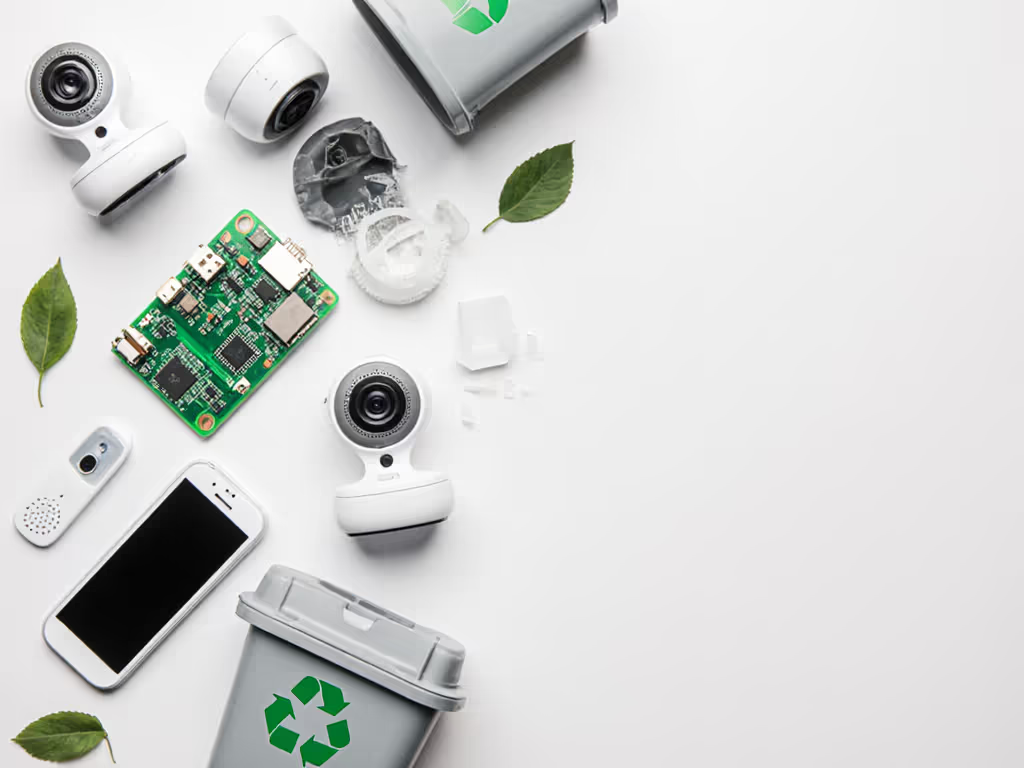
This is where most monitors end up, but e-waste baby monitor recycling requires strategy. From my retail buyer days, I've seen:
- Chain store programs (Best Buy, Staples): Convenient but limited to certain models. Best Buy accepts most electronics at Seminole Road Landfill drop-off points in DeKalb County.
- Municipal e-waste programs: Like Cobb County's designated drop-off locations, but often exclude small electronics.
- Specialized e-waste recyclers: Atlanta E-Waste Solutions, for example, offers free pickup and certified data destruction, critical for Wi-Fi models.
Pro tip: Check if your monitor contains a lithium battery (common in newer models). These need separate disposal, never crush or incinerate.
The Data Wipe Checklist: Protecting What Matters Most
Unlike general electronics, baby monitors require heightened data security. My foster care experience taught me that a simple "reset" is not enough. Follow this protocol:
- Remove all memory cards (physical storage)
- Factory reset through device settings (consult manual)
- Unpair from all accounts (manufacturer app, smart home systems)
- Remove camera from Wi-Fi network
- Test by attempting to reconnect remotely
Special note for Wi-Fi monitors: Many store video locally even if you didn't enable cloud storage. For broader privacy precautions while you're still using the device, follow our WiFi baby monitor security guide. Check "local storage" settings before disposal.
Finding Local Recycling: A Practical Breakdown
Based on my research across North American cities, here's how to locate vetted recyclers:
| Resource Type | How to Find | Reliability Score |
|---|---|---|
| Municipal Programs | Check city sanitation websites | ★★★★☆ |
| Retailer Take-Back | Best Buy, Staples, and manufacturer programs | ★★★☆☆ |
| Specialty E-Waste | Atlanta E-Waste Solutions, local certified recyclers | ★★★★★ |
| Mail-Back Programs | Manufacturer-specific (e.g., Nanit's) | ★★☆☆☆ |
Atlanta-area parents can drop monitors at Seminole Road Landfill, while others should search for "certified e-waste recycler" plus their city. Verify they provide certificates of data destruction. If sustainability is a core priority, see our guide to sustainable baby monitors to reduce impact before end-of-life. This is not just "eco-friendly monitor disposal"; it is parental responsibility.
Why Component Recycling Matters
Many parents ask: "Can't I just toss it?" When it comes to baby monitor component recycling, the answer is no. Each part has value and risk:
- Plastic casings: Can be reprocessed but release toxins if burned
- Circuit boards: Contain recoverable gold and copper
- Batteries: Pose fire risks but contain recyclable metals
- Lenses/sensors: Specialized glass requiring separate processing
Specialized recyclers like Atlanta E-Waste Solutions handle these correctly, ensuring hazardous materials don't leach into soil or water. That unassuming FHSS unit I found? Its simple construction made it easier to recycle than the Wi-Fi trio, which required disassembly of multiple circuit boards. Sometimes simplicity creates sustainability.
Final Verdict: Your Responsible Disposal Roadmap
After years testing monitors in real homes with real bedtime chaos, my verdict on responsible baby monitor disposal is clear:
- Verify functionality first - working units deserve extended life through sale or donation
- Wipe data like a security pro, not just a time-pressed parent
- Choose certified recyclers that provide data destruction proof
- Prioritize local options to minimize transport emissions
That clearance-bin FHSS monitor did not just save a family's sleep, it prevented e-waste by outlasting three flashier alternatives. Your disposal choice today has similar ripple effects. Pay once, sleep always, skip subscriptions and surprises applies beyond purchase. It is about responsible stewardship from cradle to grave.
Bottom line: The most secure, eco-friendly disposal costs little time but protects your family's data and the planet. Spend where it keeps the link alive (from your nursery today to generations tomorrow).
Related Articles